

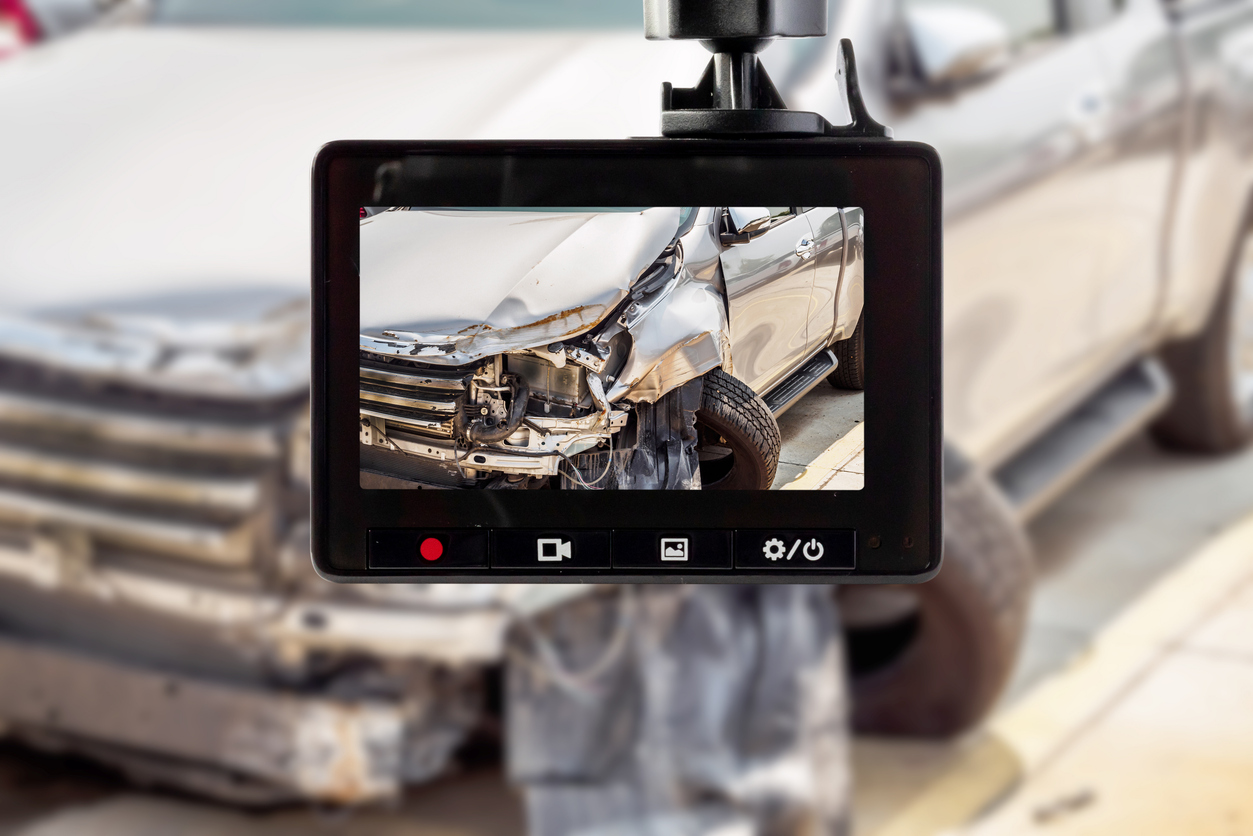
Dashcams have become increasingly common on Ontario roads. What was once seen as a niche gadget is now widely used by everyday drivers, rideshare operators, and commercial vehicles. With the rise of online videos showing accidents and near misses, many people install dashcams for peace of mind, hoping that if something happens, they will have clear evidence of what occurred.
From a legal perspective, dashcam footage can be extremely helpful but it is not always as straightforward as people assume. In some cases, it can strengthen a claim. In others, it can complicate matters or even work against the person who recorded it. Understanding how dashcams are treated in motor vehicle accident claims is important for anyone considering using one.
The most obvious advantage of a dashcam is that it provides an objective record of events. In many accident cases, liability comes down to competing versions of what happened. One driver may say they had the right of way, while the other disputes it. Witnesses may not be available, or their recollection may be limited. In those situations, video footage can be powerful evidence.
A dashcam can capture key details such as traffic signals, vehicle positions, speed, and driver behaviour leading up to a collision. It may show whether a driver failed to stop, made an unsafe turn, or was following too closely. This type of evidence can help resolve disputes more quickly and, in some cases, avoid prolonged litigation.
However, dashcam footage is not always definitive. The angle of the camera, the quality of the recording, and what is or is not captured can all affect how useful the footage is. A camera may not capture the full context of an incident. For example, it may not show a pedestrian stepping into the roadway from outside the frame, or it may not accurately reflect distances and speeds. As a result, the footage must be interpreted carefully and considered alongside other evidence.
Another important point is that dashcam footage can be used by any party involved in the claim. If you have footage of an accident, you may expect that it will support your position. However, once it is disclosed, the opposing party and their insurer are also entitled to rely on it. If the footage shows anything that could be interpreted as contributing to the accident such as speeding, abrupt braking, or inattention it may be used against you.
In our experience, this is one of the most common misconceptions. People assume that having video evidence will automatically strengthen their case. In reality, it depends entirely on what the footage shows. In some cases, it may confirm liability on the part of the other driver. In others, it may suggest shared responsibility.
It is also important to understand that dashcam footage does not replace the need for proper reporting and documentation. Even if an accident is recorded, drivers are still required to comply with legal obligations, such as reporting the accident where necessary and exchanging information. Medical attention should also be sought if there are any injuries, regardless of what the footage shows.
In some cases, dashcam footage can be particularly helpful in accidents involving disputed facts. For example, in intersection collisions, where both drivers claim to have had the right of way, video evidence can clarify the sequence of events. Similarly, in rear-end collisions, footage may show whether the lead vehicle stopped suddenly or whether the following vehicle was not maintaining a safe distance.
Dashcams can also be useful in cases involving hit-and-run incidents. If a vehicle leaves the scene, footage may capture identifying details such as the make, model, or licence plate of the other vehicle. This can assist in identifying the driver and pursuing a claim.
Despite these advantages, there are practical limitations. Not all dashcams record continuously, and some overwrite footage after a certain period. If an accident occurs, it is important to preserve the footage as soon as possible. Failing to do so can result in the loss of potentially valuable evidence.
There is also the question of how the footage is presented in a legal context. Video evidence must be authenticated and properly introduced. It may be reviewed by experts, and its reliability can be challenged. While this is typically handled as part of the legal process, it highlights that dashcam footage is one piece of evidence among many.
For individuals considering installing a dashcam, the decision ultimately comes down to personal preference. It can provide reassurance and, in some cases, valuable evidence. However, it is important to understand that it is not a guarantee of a favourable outcome in the event of an accident.
From our perspective, the most important factor in any accident case is the overall evidence. This includes not only video footage, but also witness statements, police reports, medical records, and expert opinions. Each case is unique, and the strength of a claim depends on how all of these elements come together.
At JRJ LAW, we regularly review dashcam footage as part of our investigation of motor vehicle accident claims. We assess how the footage fits within the broader evidence and advise our clients accordingly. If you have been involved in a motor vehicle accident and have dashcam footage, it is important to seek legal advice before relying on it. Understanding how that footage may be interpreted can make a meaningful difference in how your claim proceeds.
Call JRJ LAW at 1 (844) DIAL JRJ and we will be happy to help you!