

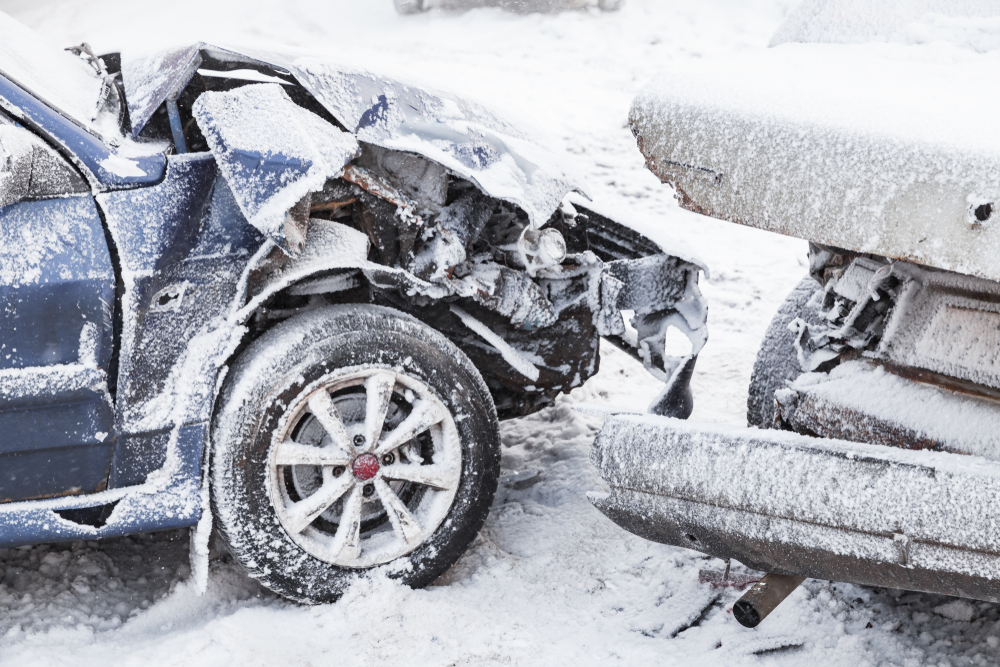
Ontario winter has a way of turning routine travel into a risk calculation you did not agree to. Black ice hides under a harmless-looking dusting of snow. Freezing rain turns ramps into skating rinks. Snowbanks narrow sightlines at intersections, and visibility can collapse in minutes. When a winter collision happens, the injuries are often more severe because vehicles slide, spin, and strike more than once.
This post explains how winter collisions can lead to catastrophic injuries, what catastrophic impairment means under Ontario’s Statutory Accident Benefits Schedule (SABS), Ontario Regulation 34/10, and what accident benefits may be available.
Common Winter Scenarios That Can Lead to Catastrophic Injuries
Winter does not “cause” negligence by itself, but it amplifies consequences. One loss of traction can trigger a chain reaction and multiple impacts. Multi-vehicle pileups are particularly dangerous because occupants may be struck repeatedly while restrained, increasing the risk of traumatic brain injury, spinal trauma, and complex fractures.
Pedestrian collisions are also a major winter risk. Snowbanks can block views, and reduced braking performance increases stopping distance. Where a pedestrian is struck at speed, the injuries frequently involve head trauma and orthopedic damage that can meet catastrophic criteria depending on functional outcome and medical findings.
When winter collisions result in life-altering injuries, one of the most important questions becomes whether the person qualifies as catastrophically impaired under the SABS. Catastrophic impairment is not a medical label; it is a legal test that determines which benefit tier applies. That legal designation can dramatically expand access to treatment funding, attendant care, and other supports.
What Qualifies as “Catastrophic Impairment” Under SABS
“Catastrophic” is not a casual label in Ontario accident benefits. It is a legal category defined by regulation. Under s. 3.1(1) of the SABS, an impairment is catastrophic if it results in one or more of eight criteria, each with specific medical and functional requirements.
Below is the full framework, with brief explanations of what each criterion means in practice.
Criterion 1: Paraplegia or Tetraplegia
This criterion applies where the collision results in paraplegia or tetraplegia (also referred to as quadriplegia). It is assessed using recognized spinal cord impairment standards referenced in the SABS. These claims often involve long-term mobility limitations, lifelong care needs, and significant attendant care requirements.
Criterion 2: Severe Impairment of Ambulatory Mobility or Use of an Arm, or Limb Amputation
This criterion addresses catastrophic outcomes involving profound loss of function, such as severe limitations in walking or meaningful use of an arm, or major amputations and loss of use. In practical terms, these are injuries that fundamentally change independence, transfers, self-care, and the ability to perform basic daily tasks without support.
Criterion 3: Total Loss of Vision in Both Eyes
This criterion applies where there is total loss of vision in both eyes as a direct result of the collision. These cases typically require extensive rehabilitation, mobility training, assistive devices, and long-term supports that go far beyond short-term treatment.
Criterion 4: Traumatic Brain Injury
Severe traumatic brain injuries can qualify under adult-specific criteria in s. 3.1(1). These cases commonly turn on acute clinical measures and outcome tools such as consciousness level, functional recovery markers, and corroborating hospital documentation. Early records, including ambulance notes, emergency department charts, and brain imaging, often become critical evidence later in the claim.
Criterion 5: Traumatic Brain Injury
For people under 18, the SABS includes child-specific catastrophic brain injury criteria. One part of that framework ties catastrophic determination to admission to certain public hospitals and positive brain diagnostic findings indicating intracranial pathology, which is why early imaging and hospital records can be decisive in pediatric files. FSRA has also issued interpretive guidance about the public hospital component of the minor TBI criteria.
Criterion 6: 55% or More Whole Person Impairment
This pathway applies where the insured person’s physical impairments, assessed using the AMA Guides methodology referenced in the SABS, result in 55% or more Whole Person Impairment (WPI). These files often involve multiple body systems, such as orthopedic trauma combined with neurological complications, where the overall functional loss is extreme even if one injury alone looks “borderline” on paper.
Criterion 7: Combination of Impairments Resulting in 55% or More Whole Person Impairment
Criterion 7 recognizes that catastrophic outcomes are sometimes cumulative. A person may have a combination of impairments that, when properly assessed and combined using the required methodology, meet the 55% WPI threshold. This is common where physical injuries are compounded by cognitive sequelae, chronic pain conditions, or multi-region functional limitations that substantially reduce independence.
Criterion 8: Mental or Behavioural Disorder Causing Marked or Extreme Functional Impairment
This pathway applies where a mental or behavioural disorder results in either Class 4 (marked) impairment in three or more functional areas, or Class 5 (extreme) impairment in one area, to the point that useful functioning is prevented. These cases are evidence-heavy and typically require strong longitudinal treatment records, neuropsychological or psychological testing, and consistent functional reporting across daily living, social functioning, concentration, and adaptation.
Benefits Available When Injuries Are Catastrophic
Ontario’s accident benefits system is “no-fault,” meaning an injured person generally claims benefits through the applicable insurer regardless of who caused the collision, subject to priority rules. When injuries meet the catastrophic impairment definition, the available supports can expand substantially, because catastrophic designation is the highest level of injury classification under SABS.
In catastrophic files, the insurer may fund reasonable and necessary medical and rehabilitation benefits, which often include longer-term therapy, assistive devices, and home or vehicle modifications aimed at restoring function and independence. Catastrophic claimants may also qualify for attendant care benefits where they require assistance with personal care, supervision, mobility, transfers, or other core activities of daily living, supported by functional evidence and assessments.
Catastrophic status can also trigger access to certain “other expense” benefits. For example, housekeeping and home maintenance are currently payable up to $100 per week when a catastrophic impairment results in a substantial inability to perform those tasks.
As of July 1, 2026, Ontario’s accident benefits framework changes significantly, with several benefits shifting to an optional-benefit model under O. Reg. 383/24, which is why policy selection and renewal decisions will matter more than ever.
Concluding Thoughts
If catastrophic impairment is in issue, the OCF-19 is typically the procedural gateway, completed by an appropriate health professional and submitted to the insurer. Insurers may accept the designation or require insurer examinations and competing assessments, which is why a consistent, well-documented treatment narrative matters from the beginning.
Catastrophic impairment claims sit at the intersection of medicine, function, and legal definitions. The insurer is not only looking at diagnosis, but also how an injury affects real-world functioning over time and whether that impact meets one of the eight SABS criteria. In winter collision cases, where injuries are often complex and layered, the difference between a well-supported claim and a disorganized file can be the difference between limited funding and long-term care access.
If you or a loved one suffered a serious winter collision injury, JRJ LAW can help you navigate accident benefits, build the evidence needed for catastrophic designation where appropriate, and push back when benefits are delayed or denied. Call us for a free consultation, and we will help you understand your next steps with clarity and care.