

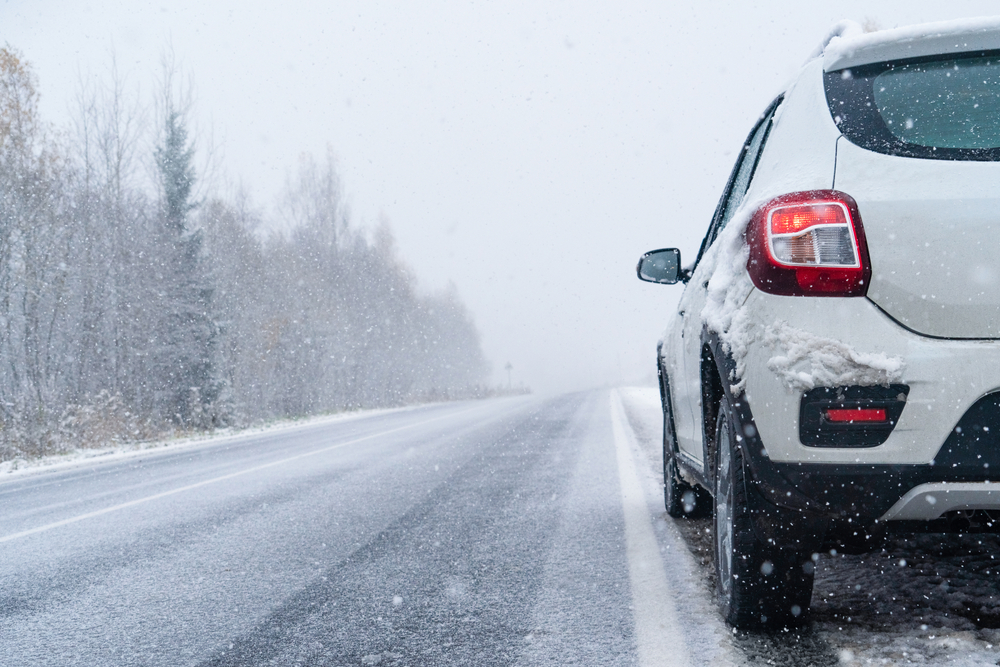
Ontario winters test everyone's patience and reflexes. Black ice hides beneath a dusting of snow. Freezing rain transforms highways and ramps into skating rinks. Visibility evaporates without warning on the 400‑series corridors.
Winter driving in Ontario is objectively dangerous. According to a Samsara report analyzing data from 2022–2025, winter accidents surge by nearly 150% compared to autumn, with winter collisions accounting for 37% of all accidents across Canada. Between 2022 and 2025, Ontario recorded 2,541 winter crashes—more than three times the number in Quebec.
When a collision happens in these conditions, clients typically ask two pressing questions. First, who bears responsibility when weather plays a pivotal role? Second, what legal protections help them recover after impact? This post explains Ontario's legal framework in accessible language and shows how winter conditions intersect with negligence law, statutory benefits, and compensation rules.
Fault and "Speed for Conditions"
Even in severe winter weather, fault determination does not rest solely on posted speed limits. Ontario law imposes a fundamental duty: drivers must operate vehicles safely for the conditions they encounter. This obligation means a driver can be found negligent even while traveling below the speed limit if their speed or vehicle control was unsafe relative to snow, ice, rain, or reduced visibility. Courts and insurers examine whether drivers took reasonable precautions—such as reducing speed, avoiding abrupt braking on slippery pavement, or allowing extended following distances. In hydroplaning or black-ice cases, the legal question becomes whether the driver-maintained vehicle control and adjusted driving inputs to the hazard.
The Highway Traffic Act establishes liability under the careless driving offense in section 130(1), which prohibits driving "without due care and attention or without reasonable consideration for other persons using the highway." Ontario's Insurance Act does not recognize adverse weather as erasing a driver's responsibility. Courts have made clear that in winter conditions, the standard of "reasonable care" is heightened. Drivers are expected to be more vigilant and cautious. Failure to adapt to wintry conditions can constitute negligence.
Evidence often decides these cases. Police collision reports, dash-cam footage, weather data from the time of the accident, tire tread measurements, speed estimates, and visibility assessments build the factual record. Additionally, courts increasingly consider whether a driver was equipped with proper winter tires. While Ontario has no province-wide mandate requiring winter tires on private passenger vehicles, courts may factor the absence of winter tires into negligence analysis—particularly when road conditions are poor. A driver's failure to maintain vehicle condition or to prepare adequately for seasonal hazards strengthens claims of negligence.
Immediate Protections: Statutory Accident Benefits (SABS)
Ontario's auto insurance system provides "no‑fault" statutory accident benefits to most injured people following a motor vehicle collision. This no-fault structure means you can access specified benefits from your own insurance policy regardless of who caused the accident. These benefits cover medical and rehabilitation care, income replacement, attendant care, and certain out-of-pocket expenses, as governed by the Statutory Accident Benefits Schedule under O. Reg. 34/10.
Critically, Ontario's accident benefits system is undergoing significant change. As of July 1, 2026, the structure will shift from a standard package to a "build-your-own" model. Currently, medical, rehabilitation, and attendant care benefits remain mandatory in every policy. Beginning July 1, 2026, these core benefits will continue to be mandatory, but many other valuable supports will become optional add-ons. Income replacement benefits, non-earner benefits, caregiver benefits, housekeeping and home maintenance benefits, and funeral and death benefits will no longer be automatic. Unless you actively elect these options at your renewal, they will not be available after a collision.
This change has profound implications. If you do not select income replacement before an accident, you may have no income stream from your auto policy while recovering. The reforms are marketed as offering flexibility and potentially lower premiums, but they raise the stakes significantly. A wise first step after a winter collision is filing your accident benefits application immediately and collaborating with your treatment team to build evidence-based treatment plans. If you are approaching your insurance renewal, review your policy with your broker or legal counsel to ensure you do not face a gap in coverage.
Additionally, starting July 1, 2026, auto insurers will become the "first payer" for accident-related medical and rehabilitation expenses, rather than requiring injured people to exhaust workplace or private health benefits first. This change streamlines care and reduces paperwork, enabling faster treatment access and preserving workplace benefits for non-accident health matters in the future.
Tort Claims for Pain and Suffering: The Threshold and Deductible
If you pursue a lawsuit against an at-fault driver, Ontario law restricts recovery for non-pecuniary damages (pain and suffering) through a "threshold test." To succeed, you must prove that your injuries caused either permanent serious disfigurement or permanent serious impairment of an important physical, mental, or psychological function under section 267.5 of the Insurance Act. This verbal threshold filters out minor or temporary injuries and reserves lawsuits for cases involving genuine, lasting impairment.
Even if you meet the pain and suffering threshold test, a statutory deductible applies to awards which fall below a monetary threshold set by the Financial Services Regulatory Authority of Ontario (FSRA) and indexed annually for inflation. As of January 1, 2026, the general damages threshold is $159,708.71, with a deductible of $47,913.01. These figures mean that if a court awards you $100,000 for pain and suffering, the deductible reduces that amount significantly—unless your award exceeds the threshold, in which case no deductible applies. Family Law Act claims have a threshold of approximately $79,853.70 with a deductible of $23,956.52.
Proving Your Case in Winter Conditions
After a winter collision, many injured people feel overwhelmed. Ontario's legal framework provides two lanes of recovery. The first is SABS, which initiates care and support without requiring proof of fault. The second is tort law, which can provide compensation for losses exceeding statutory benefits where another driver's negligence caused harm. Meeting the threshold and navigating the deductible require planning and patience, but they are achievable with credible functional evidence and clear medical documentation.
Strong evidence wins winter cases. If safe, photograph road conditions early. Photograph the scene before conditions change. Capture ice patches, slush ridges, and vehicle damage. Document tire condition. Keep consistent records. Start immediately.
Because injuries can appear "minor" initially, thorough documentation prevents later disputes about causation or severity.
Also retrieve police reports and Collision Reporting Centre records. Gather treatment records from family doctors and therapists, created close in time to your injuries, along with a contemporaneous pain journal describing limitations in function, sleep, and daily activities.
Understanding your rights and acting promptly positions you to recover fairly and fully.
If you were injured in a winter collision, you do not need to navigate this alone. JRJ LAW helps Ontarians build strong evidence, access benefits quickly, and pursue fair compensation when negligence is involved. Call us for a free consultation and let us guide your next steps with clarity and care.