

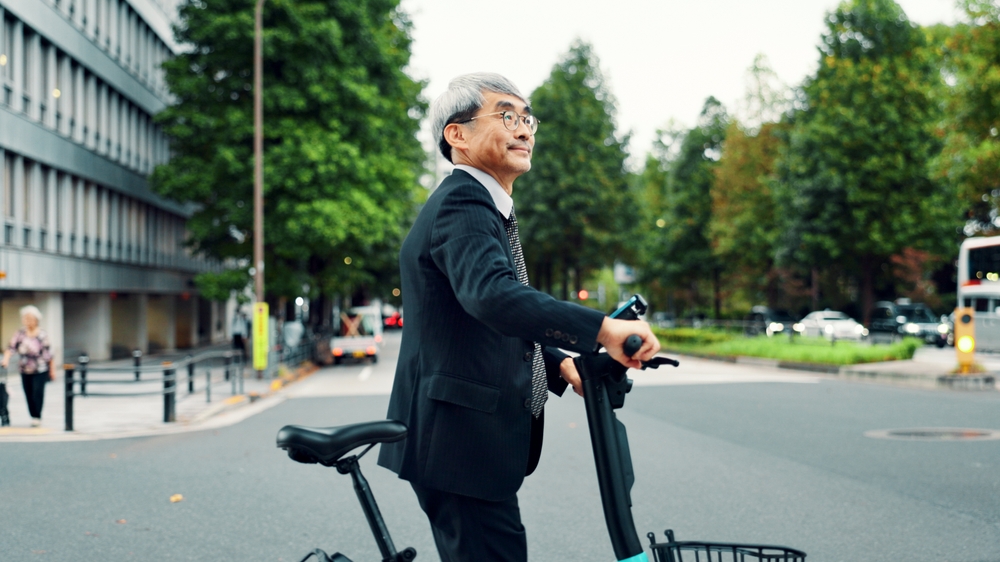
For cyclists and e-bike riders, being visible can make a major difference.
Drivers are often looking for cars, traffic signals, pedestrians, and other vehicles at the same time. A cyclist can easily disappear into a blind spot, blend into the background, or approach an intersection faster than a driver expects.
You cannot control whether every driver is paying attention, but you can make yourself easier to see and your movements easier to predict.
Here are eight simple ways to increase your visibility on the road.
1. Use Lights - Even During the Day
Bike lights are not just for riding after dark.
A front light and rear light can help distinguish you from traffic, parked cars, buildings, and other visual distractions during the day.
They can be especially useful:
- in rain or fog;
- on overcast days;
- around sunrise and sunset; and
- when travelling through shaded areas.
Before heading out, make sure your lights are charged, securely attached, and clearly visible.
2. Wear Bright or Reflective Clothing
You do not need to dress like a construction worker every time you ride.
But brighter colours and reflective material can make you easier for drivers to identify.
Reflective jackets, backpacks, ankle straps, helmet decals, and other accessories are particularly useful at night because they reflect vehicle headlights.
Even one highly visible item can help you stand out from your surroundings.
3. Stay Out of Blind Spots
Avoid spending unnecessary time directly beside another vehicle.
This is especially important around:
- buses;
- delivery trucks;
- transport trucks; and
- large SUVs.
If you cannot see a driver's mirrors, assume there is a possibility the driver cannot see you.
Blind spots become particularly dangerous near intersections, where a driver may turn across a cyclist's path.
Whenever possible, position yourself where you are clearly visible rather than remaining alongside another vehicle.
4. Ride Predictably
Drivers have a better chance of avoiding you when they can anticipate what you are going to do.
Avoid sudden lane changes or weaving between parked vehicles.
Use hand signals before turning or changing position and give other road users enough time to react.
Being visible is not only about whether a driver can physically see you. It is also about making your intended movement easy to understand.
5. Try to Make Eye Contact at Intersections
When approaching an intersection or driveway, look toward drivers who may turn across your path.
Eye contact can help confirm that a driver has noticed you.
But do not treat eye contact as a guarantee.
A driver may see you but still misjudge your speed or assume you are going to stop.
This can be particularly important for e-bike riders, who may be travelling faster than a driver expects from someone on a bicycle.
6. Stay Visible Around Parked Cars
Parked cars can hide cyclists from approaching drivers.
Repeatedly moving in and out between parked vehicles can make it difficult for drivers to understand where you are travelling.
Where possible, maintain a consistent riding position.
You should also leave enough space between yourself and parked vehicles to reduce the risk of being struck by a suddenly opened door.
7. Be Extra Careful in Poor Visibility
Rain, fog, darkness, glare, and low-light conditions can all make cyclists harder to see.
Dawn and dusk are particularly tricky because the road may appear bright enough to ride comfortably while drivers are dealing with glare or rapidly changing light conditions.
When visibility is poor:
- use your lights;
- slow down where appropriate;
- leave additional stopping distance; and
- assume drivers may have difficulty seeing you.
8. Do Not Assume a Bike Lane Means a Driver Has Seen You
Bike lanes can reduce some traffic conflicts, but they do not eliminate them.
Drivers may still cross a bike lane to:
- turn at an intersection;
- enter or leave a driveway;
- park;
- access a side street; or
- pull into a loading area.
Before entering an intersection, pay attention to vehicles that may turn across your path.
Having the right of way does not guarantee that another road user has seen you.
Visibility Is a Shared Responsibility
Cyclists and e-bike riders can take practical steps to make themselves easier to see, but drivers also have responsibilities.
Motorists must keep a proper lookout, check mirrors and blind spots, yield where required, and take reasonable care around cyclists and other vulnerable road users.
The safest approach is for everyone on the road to assume that visibility can fail and leave enough time and space to react.