
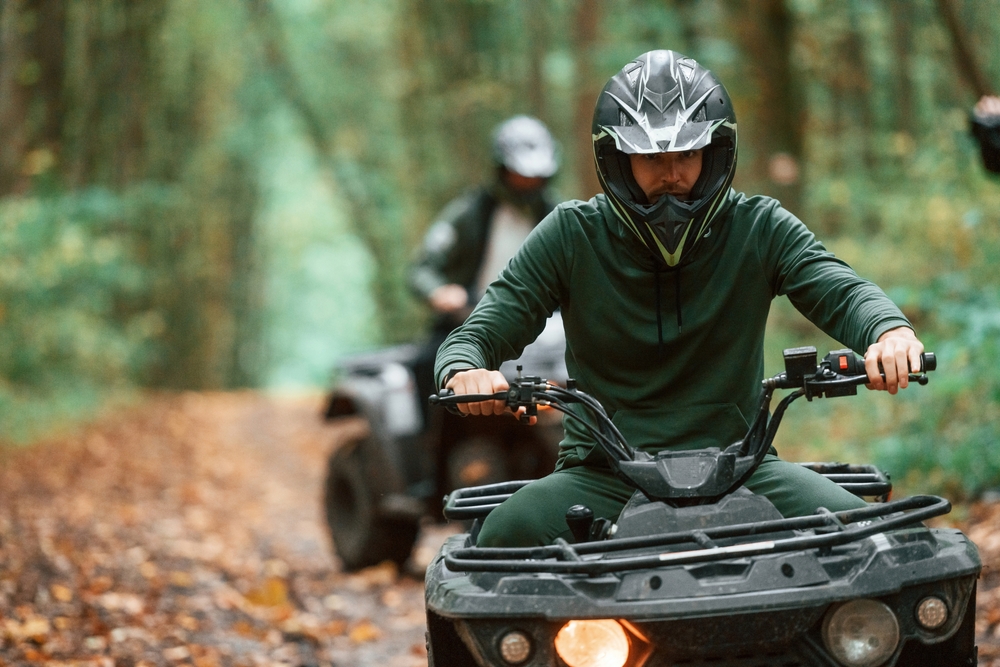
ATV riding is often described as freedom on four wheels. Riders talk about the open trails, the quiet forests, and the sense of control that comes from navigating rough terrain.
Yet, accidents still happen. Even a small shift in the ground can create a sudden loss of control. Riders often tell us that the accident felt like it came out of nowhere.
We see head injuries that occur even when riders believe they are moving slowly. We see spinal injuries caused by abrupt impacts that happen too quickly to react. We see fractures that occur when riders instructively try to protect themselves during a fall. Internal injuries are common and often overlooked at first because they do not always show immediate symptoms. Soft tissue injuries can linger long after the visible bruises fade.
Negligence may arise in several forms. Another rider may have operated their vehicle in an unsafe manner. A property owner may have failed to maintain safe conditions on the land. A rental company may have provided equipment that was not properly inspected. A manufacturer may have produced a defective component. These circumstances require careful evaluation, and they often play a significant role in determining whether compensation is available.
Following an ATV accident, certain steps are essential. Medical attention should be sought immediately, even if minor injuries appear. Documentation of the scene can preserve important evidence. Reporting the incident may be required depending on the location. The ATV should remain in its post-accident condition until it can be examined.
Compensation may be available for medical expenses, rehabilitation, lost income, pain and suffering, and housekeeping and home maintenance. Each case is evaluated individually as injuries affect every person differently. Some individuals recover quickly, while others experience long term limitations. Our role at JRJ is to assist clients in restoring stability and ensuring that their legal rights are protected.
If you have been involved in an incident causing you injury, it is always best to consult a professional lawyer who has experience arguing these types of claims to protect your interests. Please contact our team at JEWELL RADIMISIS JORGE LL.P for a free initial consultation at 1 (844) DIAL JRJ.
Frequently Asked Questions About ATV Injuries
Can I pursue a claim if I was injured while operating an ATV owned by another person?
Yes. Many individuals operate ATVs that belong to friends or relatives. If the owner failed to maintain the vehicle or permitted unsafe conditions, they may bear responsibility for the resulting injuries. Claims of this nature typically proceed through insurance.
What if the accident occurred on private property?
Accidents on private property are common. Property owners have a duty to maintain reasonably safe conditions. Hazards such as concealed obstacles, unstable terrain, or inadequate signage may create liability.
Can I pursue compensation if I was not wearing a helmet?
Yes. The absence of a helmet does not automatically prevent compensation. It may influence the assessment of the claim, but it does not eliminate the responsibility of other parties who contributed to the accident. Many injuries occur in areas of the body that helmets do not protect.
How long do I have to file a claim?
Time limits vary depending on the province and the circumstances of the accident. Some individuals delay seeking legal advice because they hope their injuries will improve. Others feel uncertain about the process. It is important to understand the applicable deadlines to avoid losing the right to pursue compensation.
What if the ATV malfunctioned?
Mechanical failure is a significant factor in many accidents. Issues involving brakes, steering, or structural components may contribute to loss of control. If a defect played a role, a product liability claim may be appropriate. These cases require technical revaluation and detailed evidence.
Do I require legal representation?
ATV injury cases often involve multiple parties, complex evidence, and detailed analysis of environmental and mechanical factors. Legal representation from JRJ will ensure that evidence is properly collected, that deadlines are met, and that negotiations with insurers are conducted effectively.
What if I partially responsible for the accident?
Many individuals believe that partial responsibility prevents them from pursuing compensation. This is not always the case. Liability may be shared among several parties, and compensation may still be available even if the injured person contributed to the accident.
Can an ATV rental company be held responsible for an accident?
Yes. Rental companies must ensure that their vehicles are safe, properly maintained, and suitable for the rider. They must also provide clear instructions regarding operations and safety. If a rental company fails to meet these obligations, it may be responsible for some injuries that occur as a result. This includes situations involving inadequate maintenance, improper equipment selection, or insufficient safety guidance.
What role does environmental conditions play in determining liability?
Environmental conditions such as weather, visibility and terrain may influence liability. For example, a property owner who allows rides to use a trial that becomes unsafe after heavy rain may bear responsibility if they fail to warn users of the hazard. Similarly, a guided tour operator who leads riders into unsafe conditions may be accountable for resulting injuries. These assessments require careful review of the circumstances and the obligations of each party involved.
Can witnesses influence the outcome of an ATV injury claim?
Yes. Witness statements can provide valuable insight into how the accident occurred. They may confirm the presence of hazards, describe the behaviour of other riders, or clarify environmental conditions. Witness accounts often help establish the sequence of events and may strengthen a claim when physical evidence is limited. Riders are encouraged to gather contact information from anyone who observed the incident.
How important is medical documentation in an ATV injury claim?
Medical documentation is essential. It establishes the nature of the injuries, the treatment required, and the potential long-term impact. Detailed medical records help demonstrate the connection between the accident and the injuries sustained. They also assist in calculating compensation for medical expenses, rehabilitation, and future care needs. Riders should ensure that all symptoms are reported to medical professionals, even if they appear minor at first.