

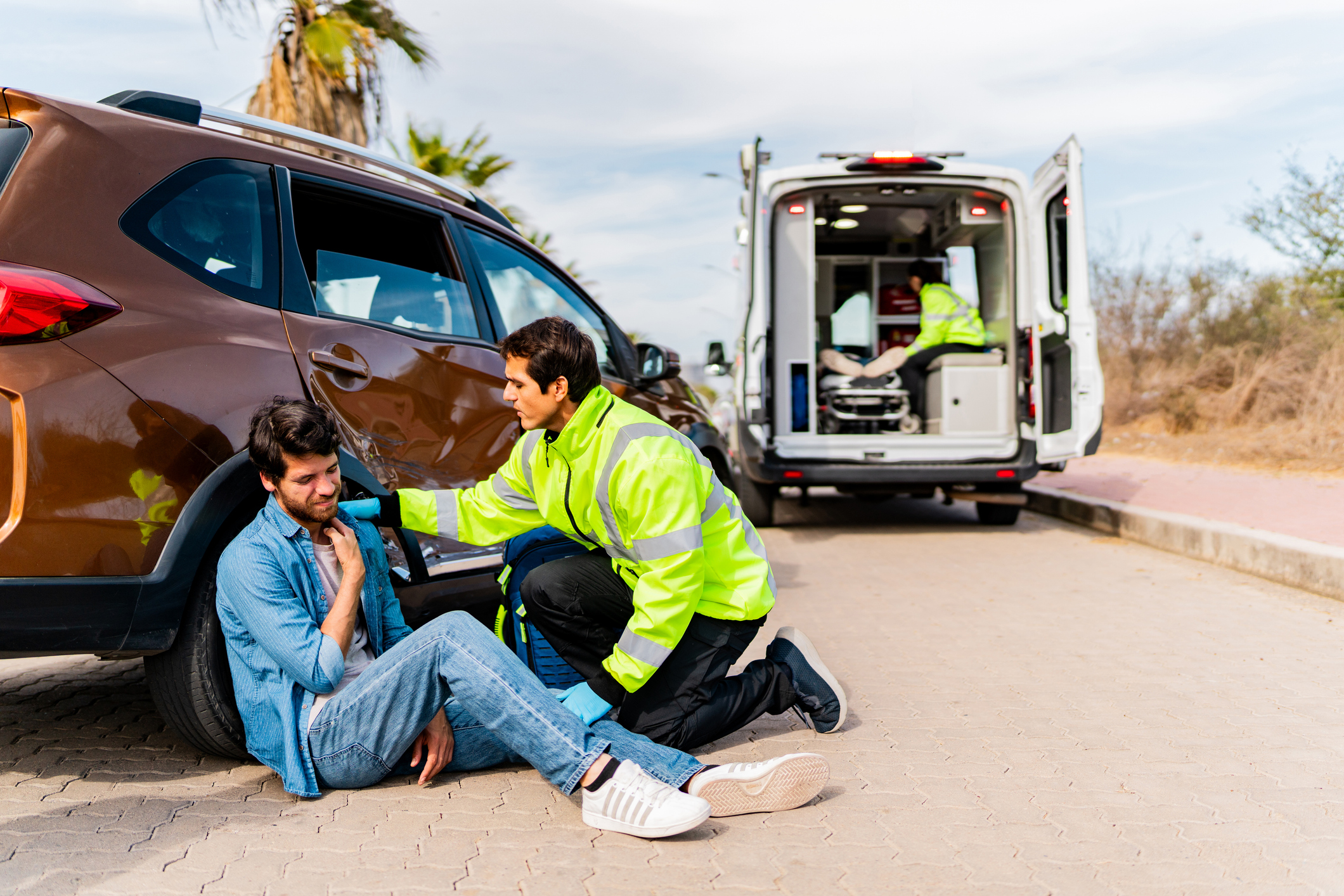
You load the car on a chilly March morning, pick up a rental for extra space, and point the GPS toward warmer weather. The plan feels simple. Then the unexpected happens. Perhaps it’s a collision on the QEW. Or it could be a rear-end moments after entering Quebec or Manitoba. It might even be a crash on a U.S. interstate, long after you crossed the international border.
This article explains what changes when a motor‑vehicle collision happens away from home, how coverage responds in common road‑trip scenarios, which optional Ontario endorsements can protect you across borders, and the practical steps to take after a crash outside Ontario or in the United States.
In brief:
- No-Fault Benefits: You can claim SABs from your own insurance company, which cover medical rehabilitation, income replacement, and non-earner benefits, regardless of who was at fault.
- Tort Claims (Lawsuits): If your injuries are “serious and permanent”, you may be able to sue the at-fault driver for damages exceeding what insurance covers (e.g., your pain and suffering). However, you should expect the tort law of the jurisdiction where the collision occurred to apply.
- Passenger Rights: Passengers injured in a car accident have the same rights to compensation as drivers, and can typically make claims against the driver of their vehicle, or the other driver, or the Ontario Motor Vehicle Accident Claims Fund if no insurance is available.
- Uninsured/Underinsured Motorist: If the responsible driver has no insurance, your policy's uninsured motorist coverage protects you. Keep in mind that many U.S. drivers carry low liability limits. Your insurer’s optional coverage should be explored.
Road‑Trip Scenarios: How Coverage Responds In Practice
Ontario drivers travel with the Ontario Automobile Policy (OAP 1), which sets out liability coverage, accident benefits, and other core protections for vehicles insured in Ontario. Your rights and duties flow from that contract.
Accident‑benefits claims are governed by Ontario’s Statutory Accident Benefits Schedule (SABS), O. Reg. 34/10, which prescribes notice, forms, eligibility, and procedures, regardless of fault. SABS can apply when an Ontario‑insured driver is injured outside Ontario, though tort rules for suing an at‑fault driver generally follow the law of the place where the collision occurred.
1) Injured inside Ontario while driving your own vehicle
Ontario liability and SABS rules apply. You claim SABS from your own insurer using the prescribed forms and deadlines; fault for any lawsuit is determined under Ontario law.
2) Injured outside Ontario, but inside Canada, while driving your own vehicle
Your Ontario policy and SABS can still respond to your benefits claim, because SABS forms part of every Ontario motor‑vehicle liability policy. However, if you bring a lawsuit against an at‑fault driver, local tort rules and procedures in the province where the collision happened usually govern that action.
3) Injured inside Ontario while driving a rental vehicle
This is similar to Scenario 1, but confirm whether you carry the OPCF 27 endorsement; it can extend your Ontario policy’s coverages to non‑owned automobiles you drive, rent, or borrow in Canada and the United States, subject to limits, time caps, vehicle‑type restrictions, and exclusions. Do not assume it covers long rentals, commercial uses, or heavier vehicles without reading the endorsement.
4) Injured outside Ontario, but inside Canada, while driving a rental vehicle
This is similar to Scenario 3; if you have OPCF 27, it can extend your Ontario coverages to the rental across provincial borders, within the endorsement’s limits and conditions. For any lawsuit against an at‑fault driver or a rental‑company defendant, expect the tort law of the province where the collision occurred to apply.
5) Injured in the United States while driving your own vehicle
You can generally access SABS through your Ontario insurer and pursue a tort claim against the at‑fault U.S. driver in the appropriate U.S. forum. Because many U.S. drivers carry low liability limits, confirm that you have OPCF 44R (Family Protection), which lets you access your own higher third‑party liability limit as excess when the at‑fault policy is not enough.
6) Injured in the United States while driving a rental vehicle
This is similar to Scenario 5, with two extra checks. First, if you rely on OPCF 27 to cover physical damage to the rental, verify the endorsement limit, rental length limit, and territorial scope; second, ensure you carry OPCF 44R in case the U.S. at‑fault driver is under‑insured and your losses exceed their policy.
A short drive across a border can change venue and governing law for tort claims, while your Ontario SABS benefits and endorsements may still be the backbone of your financial recovery.
Optional Coverage: Common Policy Endorsements
If you are leaving Ontario, it is smart to review your policy with a broker and consider specific optional endorsements. In many U.S. jurisdictions, at‑fault drivers often carry lower liability limits than what you would typically see on Ontario files, so an Ontario traveller’s losses can quickly exceed the other driver’s insurance.
- OPCF 27 — Liability for Damage to Non‑Owned Automobiles. This extends certain coverages on your Ontario auto policy to vehicles you do not own (for example, rentals or borrowed cars) in Canada and the United States, subject to clear limits and conditions. Check the endorsement’s time limits, vehicle‑type/weight restrictions, and exclusions before you decline the rental company’s coverage.
- OPCF 44R — Family Protection (Underinsured/Uninsured Motorist). This provides excess protection if an at‑fault driver is uninsured, underinsured, or unidentified. It lets you access your own third‑party liability limit as a top‑up when the other driver’s policy is too low, which is especially important for U.S. travel where minimum limits are frequently lower than Ontario losses.
What To Do After a Car Collision Outside Ontario or in the United States
If you are hurt away from home, act fast, stay calm, and create a clear paper trail that protects your benefits and any future claim:
- Get medical help now. Call 911. Speak to paramedics and police. Even if symptoms feel “minor,” get assessed; early medical records and emergency response team records anchor your injury timeline and treatment plan.
- Exchange driver and witness contact information. Collect names, addresses, driver’s licence numbers, plate numbers, and all insurance details from every driver and anyone who saw what happened.
- Photograph the scene. Vehicles, the general area, road conditions, visible injuries, and close‑ups of documents; capture contact details for witnesses.
- Photograph the injuries. Create a digital record of your injuries as they progress.
- Notify your Ontario auto insurer as soon as possible. Tell them you intend to claim accident benefits and ask for the OCF‑1 package when you return; this preserves timelines under Ontario’s accident‑benefits rules.
- Call JRJ LAW. Early advice helps you preserve out‑of‑province evidence, keep Ontario benefits on track, and avoid missteps that can impact coverage and limitation periods.
JRJ LAW can help
A road‑trip collision is stressful, especially when it happens outside Ontario. We secure your Ontario accident‑benefits path, so you do not miss critical deadlines, then we map your full coverage picture, and cross‑check which limits actually respond to your loss and assess your potential tort claim.
If the at‑fault driver is in another province or the United States, we will coordinate with trusted local counsel while keeping your Ontario benefits moving. We organize medical and functional evidence, obtain written decisions from insurers, and allow you to focus on recovery.
If a road‑trip injury is derailing your plans, contact JRJ LAW for a free consultation. We move quickly on the steps that protect your claim and your future.
Call JRJ LAW at 1 (844) DIAL JRJ and we will be happy to help you!