

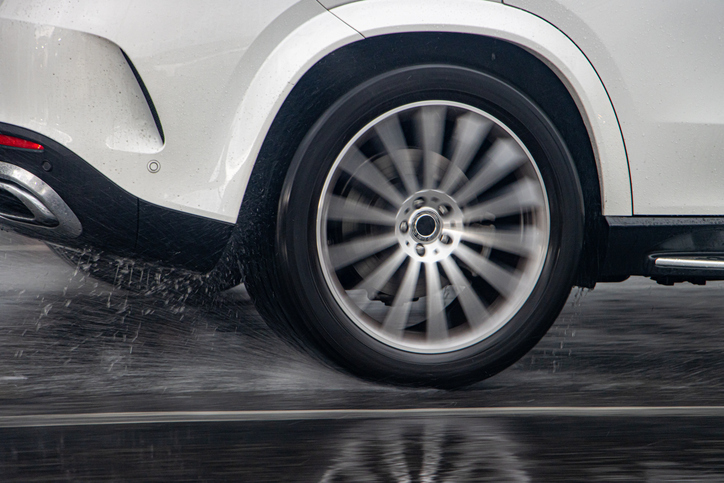
Spring does not arrive gently in Ontario. It comes hard and fast. It is rarely a slow melt that eases from snowbanks to blossoms and then calmly into summer. Instead, spring brings cold, persistent rain, sudden warm spells, and just as suddenly, freezing temperatures again. Snow and ice retreat unevenly, drainage systems struggle to keep up, and melting runoff pools across lanes that look safe at first glance.
There may be no black ice on the roads and no blowing snow, but the danger does not disappear. It simply changes form. Water accumulates along well travelled routes, highway ruts fill, and asphalt takes on a reflective sheen that hides depth and traction. When tires skim over standing water, steering can feel weightless without warning. Hydroplaning is not a mild spring inconvenience. It is every bit as dangerous as winter skidding, and sometimes more so because it arrives when drivers are least prepared for it.
Spring in Ontario has a way of creating misplaced confidence. Each year, during those first warm stretches, Ontarians roll down their windows, adjust their driving habits, and convince themselves that winter is finally behind them.
We never learn from our mistakes. Every year, there is a collective hope that spring has been skipped and July’s patio season has arrived early. That optimism often brings overconfidence behind the wheel, even though road conditions have not yet stabilized and Mother Nature has not finished cycling through the season.
Hydroplaning collisions often leave people shaken and confused. Drivers replay the moment repeatedly, asking the same questions. Was this really my fault if the road was wet? Can weather excuse what happened? Why does liability still feel contested when conditions were clearly dangerous?
Individuals often feel blamed by circumstances they could not control. However, the weather does not excuse negligence. It is a driver’s responsibility to consider the weather and drive safely.
Winter Skidding Versus Spring Hydroplaning: What Is Actually Happening Under Your Tires
In winter conditions, skidding usually occurs because tires lose traction against snow, slush, or black ice. The rubber is still in contact with the road surface, but friction is dramatically reduced. On black ice especially, the tire remains pressed against pavement, yet cannot grip it. Steering input can still influence the vehicle to some degree, which is why winter driving guidance focuses on smooth corrections, gentle braking, and steering in the direction you want the vehicle to go. When a winter skid occurs, a driver may still be able to regain control by easing off the accelerator, avoiding sudden braking, and making slow, deliberate steering adjustments as traction gradually returns.
Hydroplaning works differently. The tires are not touching the road at all. A thin layer of water builds between the tire and the pavement, lifting the tire and causing it to ride on water instead of rubber. When this happens, steering response drops or disappears. Braking becomes ineffective. Drivers often describe the sensation as floating or weightless because the tires are no longer doing the work they are designed to do.
Steering inputs are not as helpful here. Because the tires are riding on water, aggressive steering can destabilize the vehicle once contact is regained. The safest response is to ease off the accelerator, avoid braking unless absolutely necessary, keep the steering wheel as steady as possible, and allow the vehicle to slow naturally until the tires reconnect with the road surface. Once traction returns, normal steering control resumes.
Avoiding Hydroplaning Before It Starts
- Tire condition is critical.
Worn tread cannot channel water away efficiently, which increases the risk of water building up beneath the tire. Proper inflation matters as well. Underinflated tires are more prone to losing their water‑displacing effectiveness.
- Speed is a major factor.
Even moderate speeds can lead to hydroplaning when water pools in ruts or depressions along highways. Slowing down during heavy rain, increasing following distances, and avoiding sudden movements are practical, protective decisions, not signs of hesitation.
- Know where water accumulates.
The first rainfall after winter often brings oil residue and debris to the surface, creating especially slick conditions. Pooled water forms commonly in the same places each year, particularly along highways with visible wear patterns.
Protecting Yourself From Other Drivers
One of the most difficult aspects of spring driving is not your own behaviour, but the unpredictability of others. Some drivers do not adjust their habits as the snow melts and April showers commence. Overconfidence, tailgating, abrupt lane changes, and excessive speed all increase the risk of being struck by a vehicle that is hydroplaning out of control.
Defensive spacing is critical. Leaving extra room between vehicles gives you reaction time if another driver loses traction. Avoid travelling alongside vehicles for extended periods during heavy rain. Position yourself where you have escape space, not boxed‑in lanes with little margin. Be especially cautious near large vehicles that throw heavy spray, which can hide standing water and reduce visibility without warning.
Hydroplaning is not a failure of skill. It is a physical event governed by speed, water depth, tire condition, and road design. Respecting it the way Ontarians respect winter skidding is not only sensible, it is necessary for safety.
Core Legal Principle: Weather Does Not Excuse Negligence
A common misconception is that staying under the posted speed limit protects drivers from fault when roads are wet. Ontario law does not work that way. Speed limits are ceilings, not entitlements. The posted speed limits are irrelevant if the speed is unsafe for conditions at hand.
Ontario courts and insurers approach weather‑related collisions, including hydroplaning, through the lens of reasonable care in foreseeable conditions. Rain, pooled water, and seasonal thaw are not treated as unexpected events; they are treated as conditions that demand heightened caution. Hydroplaning is therefore not viewed as “an accident caused by rain,” but as a loss of vehicle control that requires explanation by the driver who lost control.
Drivers have a duty to keep others on the road reasonably safe. This includes driving at a speed reasonable for road and weather conditions, and also anticipate foreseeable hazards, including rain and standing water. In fact, there is a strong weight on foreseeability. If the hazard was foreseeable, a reasonable driver should have adjusted their driving behaviour accordingly.
How JRJ LAW Helps
Spring weather collisions can leave people second‑guessing moments they could not control. Ontario law looks at reasonable care under real‑world conditions. If you were injured in a hydroplaning collision and need clarity, JRJ LAW offers free consultations to explain next steps, preserve evidence, and protect your recovery with care and precision.
We guide clients through the legal and practical aftermath of collisions by:
- Securing accident benefits and coordinating early treatment supports.
- Building evidence that explains road conditions, vehicle behaviour, and legal fault.
- Assessing liability exposure and identifying contributory or shared fault scenarios.
- Protecting threshold and deductible positioning through structured medical proof.
Our work is focused on clarity, evidence, and protecting recovery before disputes harden.
Please contact JRJ LAW at 1 (844) DIAL JRJ for a free consultation!