

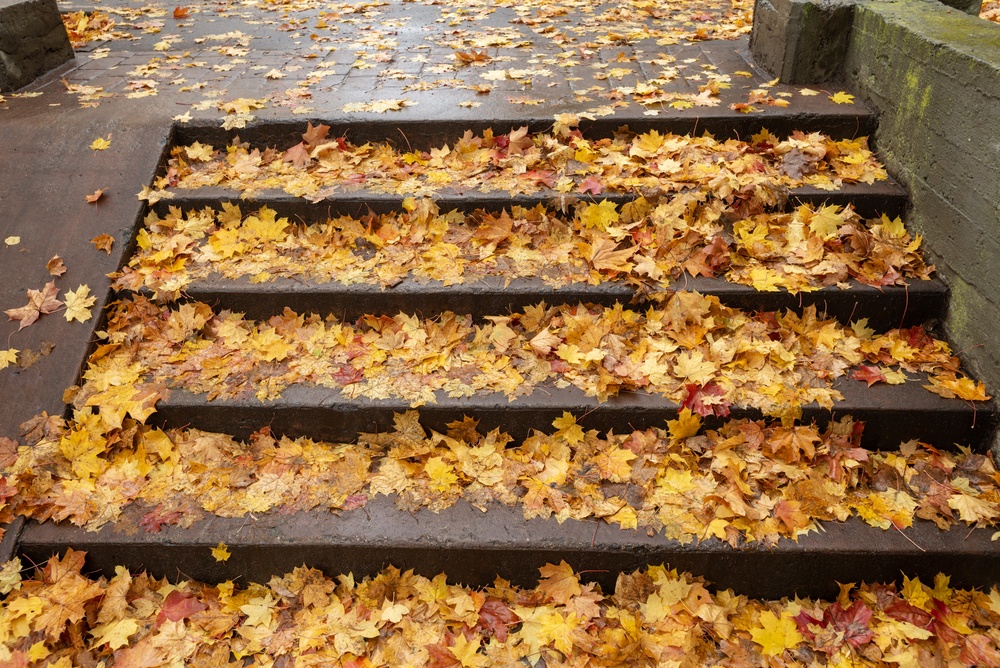
Autumn and early winter bring wonderful sights, but they also introduce serious safety hazards around homes and businesses. Property owners, commercial shops, and local municipalities have a legal duty to keep their properties safe for visitors. When temperatures drop close to freezing, the mix of fallen leaves and early morning frost creates an extremely slippery surface on walkways, parking lots, steps, and entryways. When property managers ignore this responsibility, pedestrians face a high risk of suffering severe injuries.
Property maintenance does not start and end with snow shoveling in deep winter. Late autumn requires the exact same level of attention and care. Fallen leaves hold a lot of moisture. As they break down and rot, they leave behind a greasy and slippery layer on concrete and asphalt. When a light morning frost lands on top of this layer, these paths turn into a dangerous slip-and-fall zone. Thick piles of leaves also hide uneven pavement, cracked walkways, tree roots, and broken steps. This turns a simple walk into an unexpected obstacle course.
Commercial landlords, store owners, and city workers need to run regular checks and keep up with property maintenance. This means clearing away fallen leaves on a regular basis, putting down salt or sand when frost is expected, and fixing broken walkways right away. If property owners fail to do this, they may be acting negligently.
It is important to understand that a fall does not automatically mean someone was negligent. Ontario’s Occupiers’ Liability Act requires reasonable care in the circumstances, rather than a guarantee that every surface will always be perfectly safe. The central question is whether the person responsible for the property took reasonable steps to address the danger. A review may consider when the slippery condition developed, whether it could reasonably have been identified, and what was done in response. This distinction matters when assessing a walkway affected by changing weather rather than assuming that an injury alone proves a legal claim.
Responsibility may also extend beyond the name on the property title. Under the Act, an occupier can include someone who has physical possession of the premises or responsibility for and control over their condition. Depending on the arrangements, a landlord, commercial tenant, or property manager may have relevant responsibilities. More than one occupier can be involved at the same location. For someone injured outside a shop or apartment building, identifying who controlled the particular walkway is therefore an important part of the investigation. Ownership alone may not provide the complete picture of who was responsible for addressing the hazard.
When documenting a fall, aim to capture context as well as close views of the surface. If it is safe to do so, photographs showing the entrance, nearby drains, lighting, handrails, and any warning signs can help explain the scene. Record the approximate time and the precise location, including which side of a building or which set of steps was involved. Keep your account factual and distinguish what you personally observed from what someone later told you. Do not return to an unsafe area simply to collect evidence. Existing photographs and witness information can be shared with your lawyer instead.
There is another timing issue where snow or ice contributed to an injury. Section 6.1 of the Act generally requires written notice within 60 days after the injury to the occupier or an independent contractor employed to remove snow or ice during the relevant period. The notice must include the date, time, and location of the occurrence and be personally served or sent by registered mail. Exceptions exist, but they should not be assumed. Where frost is involved, obtain legal advice promptly about whether this rule applies. This notice requirement is separate from starting a lawsuit.
Finally, keep the information connected to your fall in one accessible place. Save correspondence with the property manager, copies of incident reports, photographs, receipts, and notes about any practical difficulties you experience afterwards. Record dates accurately and avoid guessing when your memory is uncertain. If you discover an error in an earlier account, explain the correction rather than silently replacing the original record. An organized file gives your lawyer a clearer starting point for reviewing what happened and identifying missing information. These suggestions are general information, not legal advice; the appropriate next steps depend on the circumstances of your fall.
Frequently Asked Questions
What constitutes a breach of duty under the Occupiers’ Liability Act?
A property owner breaks their legal duty of care when they fail to take reasonable steps to prevent foreseeable harm to visitors. For example, if a business owner leaves a thick blanket of wet leaves covering their front walkway for days without putting salt or clearing them away, they have failed in their legal duty to keep the property safe if it causes a person to slip and fall.
What evidence is critical in a slip and fall claim?
Getting evidence right away is critical. You should take photos of the exact hazard that caused your fall, such as uncovered leaves or hidden pavement cracks, before the weather changes or the property owner cleans the area. You should also request an incident report and ask for security camera footage. Ensure that you keep the shoes and clothes you wore during the fall, and get contact details from anyone who saw it happen.
How long do I have to file a personal injury claim for a slip and fall?
In Ontario, the general time limit to file a lawsuit is two years from the date of the incident. However, if your slip and fall happened on public property owned by the city, like a municipal sidewalk, very strict notice rules apply. You often have to notify the city within ten days. Consulting a personal injury lawyer right away ensures you never miss these strict deadlines.
If you have been involved in an incident causing you injury, it is always best to consult a professional lawyer who has experience arguing these types of claims to protect your interests. Please contact our team at JEWELL RADIMISIS JORGE LL.P for a free initial consultation at 1 (844) DIAL JRJ.