

Was your child hit by an e-bike while trick-or-treating in Toronto or the GTA? Learn how Ontario law treats e-bike pedestrian collisions, what insurance may be available, and how families can protect a child's claim.
Key Takeaways
- Ontario usually treats a compliant e-bike as a power-assisted bicycle, not a motor vehicle.
- When only a pedestrian and a compliant e-bike are involved, statutory accident benefits may not be available. The claim usually depends on proving the rider was negligent.
- A modified or non-compliant e-bike may be treated as a motor vehicle. That can open up very different insurance options.
- Children are not held to an adult standard of care. People on the road are expected to watch out for them.
- A parent or litigation guardian brings the claim for a child. Settlements for minors generally need court approval.
A Night That Should Have Been Fun
Halloween evening is finally here.
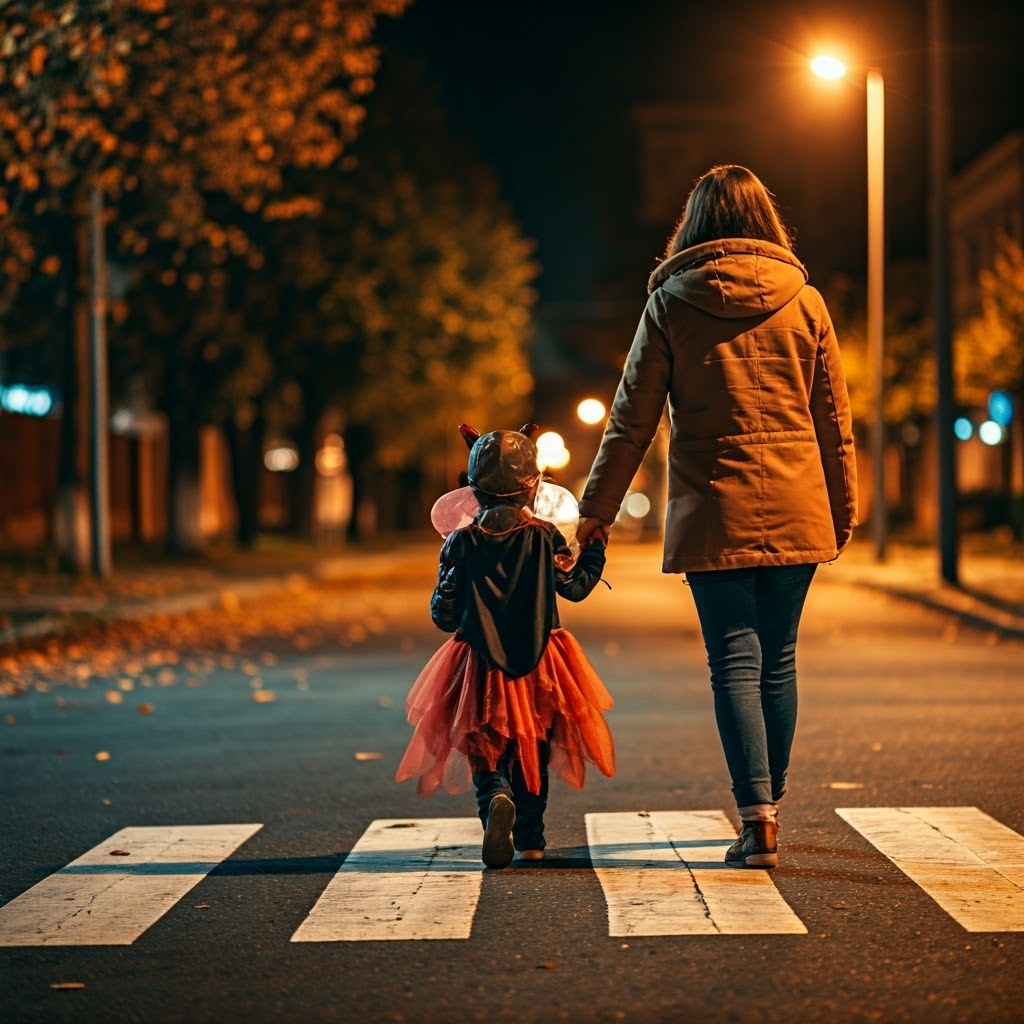
Ten-year-old Sarah has spent weeks planning her costume. As the sun goes down, she sets out through her neighbourhood with friends and family, going from house to house collecting candy.
She starts to cross a residential street after dusk. An e-bike rider comes around the corner faster than she expects and cannot stop in time. Sarah is knocked to the ground.
What follows is every parent's nightmare: the emergency department, scans, missed school and follow-up appointments. Soon another question comes up. If an e-bike hit my child, is this treated as a car accident?
Often it is not. That answer can change how the family gets treatment funded and who pays for the child's losses.
Why Halloween Is Especially Dangerous for Children
Several risks overlap on Halloween night:
- Darkness. Trick-or-treating peaks after sunset, when it is hardest to see people.
- Costumes. Masks can block a child's view, and dark fabrics make children harder to spot.
- Unpredictable movement. Excited children cross mid-block, step out between parked cars and change direction suddenly.
- Crowded streets. Drivers, cyclists, e-bike riders and pedestrians all share the same residential streets.
E-bikes add their own hazards. They speed up quickly and are much quieter than cars. In a busy, noisy neighbourhood, children may not hear one coming or judge how fast it is moving. Most parents think about cars on Halloween. Fewer think about e-bikes.
Is an E-Bike a Motor Vehicle Under Ontario Law?
Usually, no. Ontario regulates compliant e-bikes as "power-assisted bicycles" under the Highway Traffic Act and its regulations. To qualify, an e-bike must meet set requirements for power, speed, weight and equipment, including working pedals. Ontario generally limits compliant e-bikes to a motor of 500 watts or less and an assisted speed of no more than 32 km/h.
This classification matters. Ontario's no-fault accident benefits system is tied to accidents involving an "automobile." A compliant e-bike generally does not count as one.
When the answer changes
Some vehicles sold or ridden as "e-bikes" do not meet Ontario's definition. Heavier moped-style models, bikes that have been modified to go faster or produce more power, and bikes with the pedals removed may fall outside the power-assisted bicycle category. The law may then treat them as motor vehicles. That brings in licensing, registration and insurance requirements.
If the rider was operating an uninsured motor vehicle, the family may be able to claim through their own auto policy. This can apply even if the child was never in a car. Other compensation sources may also apply, including Ontario's Motor Vehicle Accident Claims Fund. This is why examining the e-bike itself is often one of the first steps in these cases.
If a Compliant E-Bike Hit Sarah
Suppose the e-bike was fully compliant, and no car, truck or bus was involved.
In that case, Sarah may not have access to Statutory Accident Benefits, which would usually be available to a child struck by a car. Her claim depends instead on ordinary negligence principles.
The key questions include:
- Was the rider going too fast for a crowded street on Halloween night?
- Was the rider distracted or not keeping a proper lookout?
- Was the rider on a sidewalk or path where local bylaws prohibit e-bikes?
- Did the rider ignore a stop sign or other traffic control?
- Did the rider have working lights at dusk?
The answers often decide liability.
How Ontario Courts Assess Fault When a Child Is Injured
Ontario law does not expect children to show adult judgment. A child's conduct is generally measured against what a reasonable child of similar age, intelligence and experience would do. A ten-year-old excited about trick-or-treating is not held to the same standard as an adult crossing the road.
Courts also expect drivers and riders to take extra care where children are likely to be, and few places fit that description better than a residential street on Halloween. Visibility, the rider's speed and whether the collision could reasonably have been avoided all count.
This does not make the rider automatically responsible. It also does not guarantee compensation. Each case turns on its facts.
The Insurance Gap Many Families Don't Expect
In a car accident, an auto insurer is almost always involved. The main source of compensation is often a claim against the rider personally. Whether the rider has insurance becomes a key question.
Personal liability coverage under the rider's homeowner's or tenant's policy may respond in some cases. Many of those policies, however, contain exclusions for motorized vehicles, and the wording is important. A lawyer can identify which policies may apply and push back on coverage denials.
Can Parents Sue on Behalf of Their Child?
Yes. A child cannot start or manage a lawsuit alone. A parent or other adult acts as the child's litigation guardian and brings the claim for them.
A claim may seek compensation for:
- Pain, suffering and loss of enjoyment of life
- Rehabilitation and future care costs
- Effects on schooling and future earning ability
- Out-of-pocket expenses
Under Ontario's Family Law Act, close family members may also have claims of their own. These can cover lost care and companionship, and expenses such as travel to appointments or time off work.
Ontario courts protect injured children closely. A settlement for a minor generally needs court approval, and the money is usually held for the child until adulthood. The goal is to protect the child's long-term interests, including treatment needs that may not show up for years.
Special limitation rules can apply to claims involving minors. Families should still not wait. Evidence fades quickly, and early advice keeps every option open.
How JRJ LAW Helps Families
E-bike collisions involving children raise questions that ordinary car accident cases do not. JRJ LAW helps families by:
- Investigating whether the e-bike was compliant, and what insurance applies as a result
- Identifying every possible source of compensation
- Gathering video, witness and scene evidence before it disappears
- Working with your child's doctors and treatment providers
- Explaining the process clearly, including the court approval process for minors
- Protecting your child's long-term interests
Halloween should be remembered for costumes, candy and time with family, not hospital visits and uncertainty. When an e-bike injures a child, the legal questions can be surprisingly complicated.
If your child has been injured in an e-bike collision in Toronto or anywhere in the GTA, contact JRJ LAW for a free consultation. We can explain your family's options and the steps that can protect your child's future.
Frequently Asked Questions
- Is a child hit by an e-bike covered by auto insurance in Ontario? Not always. If the e-bike was a compliant power-assisted bicycle and no car was involved, accident benefits may not apply. If the e-bike was modified or did not meet Ontario's definition, auto insurance options may be available.
- Who pays if the e-bike rider has no insurance? It depends on the facts. Possible sources include the rider personally, the rider's home or tenant policy, and, if the e-bike counts as a motor vehicle, your own auto policy or the Motor Vehicle Accident Claims Fund.
- Can my child be blamed for running into the street? A child is judged by the standard of a reasonable child of the same age and experience, not an adult. Riders are expected to anticipate children, especially on Halloween.
- Does a settlement for my child need court approval? Generally, yes. Ontario courts review settlements for minors to make sure they protect the child's interests.