

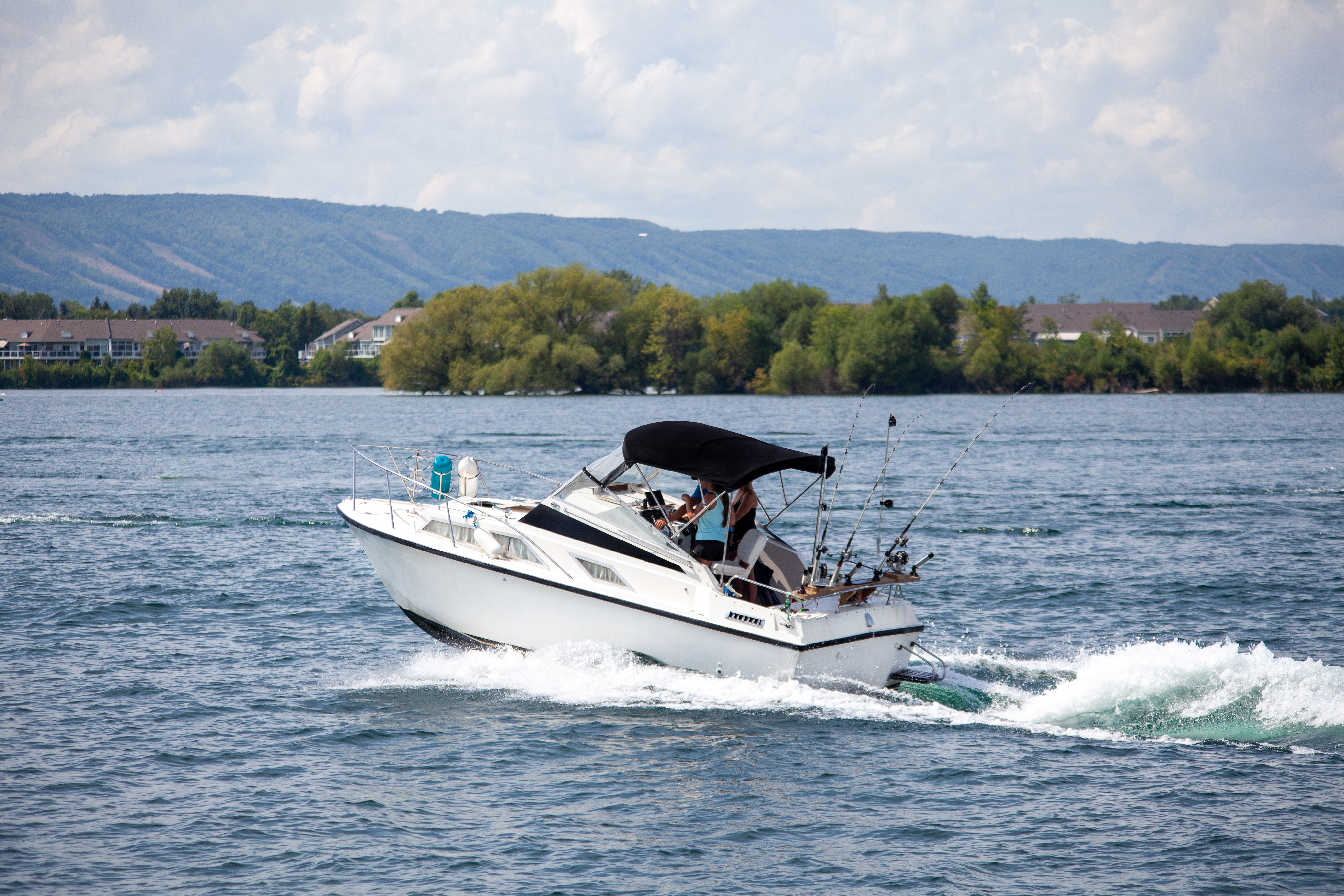
By late May, Ontario’s lakes change character. The Victoria Day long weekend is officially the unofficial start to summer. Quiet shorelines give way to weekend traffic on the water. It’s one of the busiest days to be out on a boat.
Most Ontarians assume that boating insurance works like car insurance. That assumption is understandable and often dangerous. What often goes unconsidered is how differently the law treats incidents on water compared to incidents on roads. Many people are frequently surprised to learn that the protections they rely on while driving do not automatically follow them onto the lake.
In brief, automobile insurance in Ontario is mandatory, standardized, and heavily regulated. Boating insurance is none of those things. The law takes a fundamentally different approach to recreational vessels, and that difference has real consequences when someone is injured on the water.
This article discusses automobile insurance as it relates to boats on water versus cars on roads.
Is Boating Insurance Mandatory in Ontario?
No. There is no provincial requirement that pleasure craft owners carry insurance in Ontario.
This single fact shapes everything that follows.
A person can legally own and operate most recreational boats without any liability insurance at all. That includes motorboats, personal watercraft, and larger pleasure craft used on Ontario lakes and rivers.
Some indirect requirements exist. Marinas often require proof of insurance to dock. Lenders may require insurance if a vessel is financed. Rental companies frequently carry commercial policies. However, these are contractual requirements, not legal ones. Many private owners carry none.
From a practical standpoint, a boater may be entirely uninsured.
What Does Boating Insurance Typically Cover?
When boating insurance is purchased, it is usually provided through a marine insurance policy that combines several types of coverage. These policies are not standardized, and terms vary significantly between insurers. The most common components include:
- Third‑Party Liability Coverage
This is the most important coverage from a personal injury standpoint.
Liability coverage responds when a boat owner or operator causes injury or death to another person, including swimmers, passengers, occupants of other vessels, or people on docks and shorelines.
Liability limits vary widely. Some policies provide relatively modest coverage. Others provide higher limits similar to automobile policies. There is no mandated minimum.
From a practical standpoint, this means that two identical boating incidents can have very different legal outcomes depending solely on the insurance choices made by the boat owner.
- Accident Benefits or Medical Payments Coverage
Some marine policies include limited medical payments coverage for injuries to the insured or passengers. This coverage is not equivalent to Ontario’s statutory accident benefits.
There is no guaranteed income replacement, no structured death benefit, and no uniform benefit schedule. Coverage limits are usually low and vary significantly by policy.
Boaters often assume that their health coverage or automobile insurance will step in. That is not always the case.
- Property Damage Coverage
This portion of a policy covers damage to other vessels or property caused by the insured boat. While important, property coverage does not assist injured individuals directly.
Who Is Covered When a Boat Is Involved in a Collision?
Coverage depends on policy wording. Some policies insure only named operators. Others extend coverage to permissive users. Some exclude certain activities, such as towing, high‑speed operation, or use after alcohol consumption.
Boating under the influence remains a leading factor in serious boating injuries and fatalities. Many marine insurance policies contain exclusions for losses arising from impaired operation. Even where a criminal charge is not laid, insurers may take the position that alcohol consumption voids coverage. This creates an additional layer of risk not present in the same way for car insurance, where coverage exclusions are tightly regulated.
For injured parties, impairment can complicate both liability and insurance recovery. For boat owners, it can result in personal exposure without insurance protection.
These details matter enormously after a serious incident. A common issue in boating claims is discovering, after the fact, that the person operating the boat was not covered under the policy. This turns a claim from an insurance‑backed process into a personal negligence lawsuit against an individual.
The Marine Liability Act
All boating injury and fatality claims are governed by the Marine Liability Act, a federal statute that applies on Ontario waters. The Act allows vessel owners to limit their liability in certain circumstances based on the size of the vessel. This limitation applies even when negligence is proven, unless very specific exceptions are met. From a practical standpoint, this means that:
- Insurance limits may effectively define the maximum realistic recovery.
- Even severe losses may be constrained by statutory caps.
- Underinsured boat owners create significant risk for others on the water.
This is fundamentally different from motor vehicle cases, where policy limits are the primary constraint and statutory limitation schemes do not apply.
The Insurance Act
Ontario’s Insurance Act mandates automobile insurance for all drivers. Coverage is standardized and compulsory. Key features include:
- Mandatory third-party liability coverage.
- No-fault statutory accident benefits.
- Clear priority rules and dispute mechanisms.
Additionally, Statutory Accident Benefits provide immediate access to income replacement, medical benefits, attendant care, and death benefits, regardless of who caused the collision.
Tort claims operate alongside these benefits, allowing injured parties or families to pursue additional compensation when another driver is at fault. This dual system is unique to motor vehicles.
If a driver causes a collision. Insurance responds immediately under a standardized policy.
If a boater causes an injury. The injured person must identify the owner, locate insurance if it exists, establish negligence, and confront potential liability limits.
The process is slower, more technical, and more uncertain.
Practical Takeaways for Ontario Boaters
For those who own or operate boats in Ontario, several practical realities follow:
- Boating insurance is optional, but the risk exposure is substantial.
- Liability limits should reflect the potential for catastrophic loss, not just property damage.
- Operator permissions and exclusions should be clearly understood.
- Alcohol‑related exclusions are common and consequential.
- Insurance choices affect not only personal risk, but the protection available to others on the water.
From a legal perspective, boating remains one of the least regulated recreational risk environments despite the severity of potential injuries.
How JRJ LAW Helps
Boating is a valued part of Ontario life, particularly in cottage country. It is also an activity where legal protection depends far more on individual insurance choices than many people realize.
Boating should be enjoyable, not legally confusing. Understanding how boating insurance actually works is an essential part of boating responsibly.
If you or your family has been affected by a boating incident, understanding how liability differs from motor vehicle collisions can clarify next steps.
JRJ LAW offers free consultations to discuss your situation and available options. We assist clients by:
- Analyzing insurance coverage and statutory gaps.
- Explaining liability exposure and recovery options.
- Coordinating marine and legal investigations.
- Building claims grounded in evidence and law.
Please contact JRJ LAW at 1 (844) DIAL JRJ for a free consultation!